Martyn's Law resources for Scottish venues
Practical guidance, templates and a proven risk assessment method for venues and events.
What is coming, and when
The Terrorism (Protection of Premises) Act 2025 received Royal Assent on 3 April 2025. The main duties are expected to start in spring 2027.
If your premises or events can hold 200 or more people, you will need to notify the Security Industry Authority and have public protection procedures in place. At 800 or more, the requirements go further.
Does the Act apply to your premises?
Three questions. Nothing is sent anywhere and no details are recorded.
Scope and tier checker
Based on the Home Office statutory guidance published in April 2026.
This is a guide to scope, not a legal determination. Responsibility for deciding whether the Act applies rests with the responsible person.
A route to readiness
Two licensed publications, available separately or together. Both are tailored specifically to Scotland.
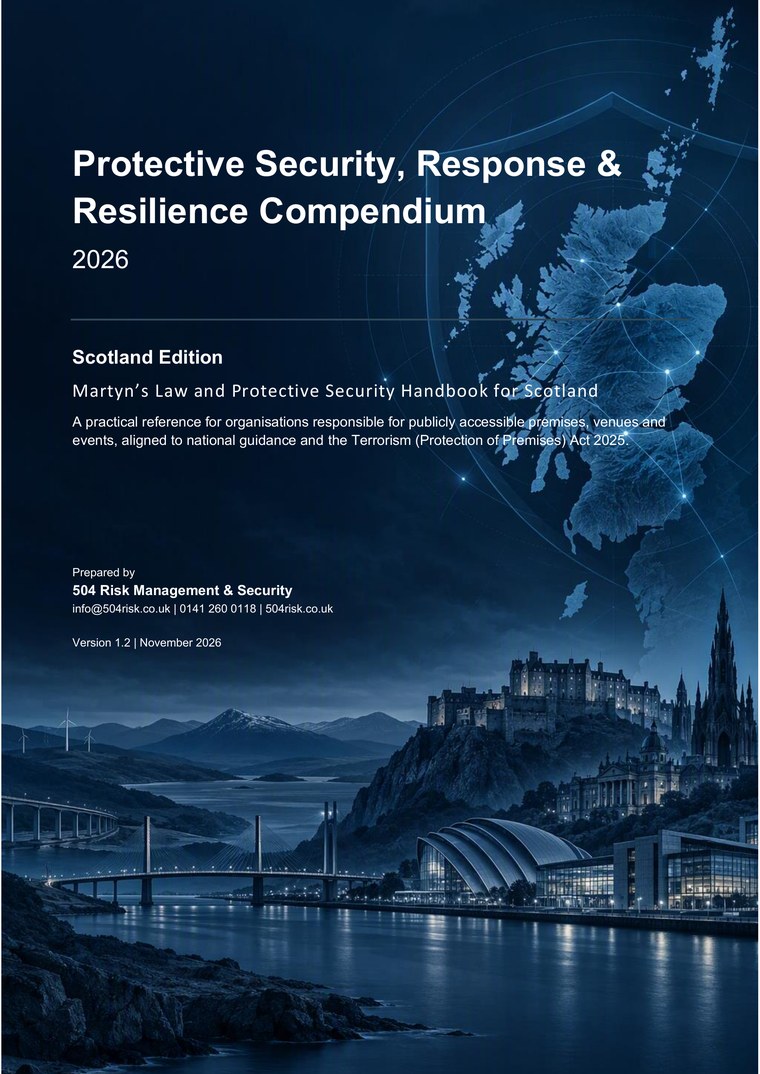
Protective Security, Response & Resilience Compendium 2026
Everything you need to protect people at your premises or events, in one reference. Martyn's Law scope and duties, attack methods, physical, personnel and cyber security, emergency response, and fifteen working appendices.
See what is inside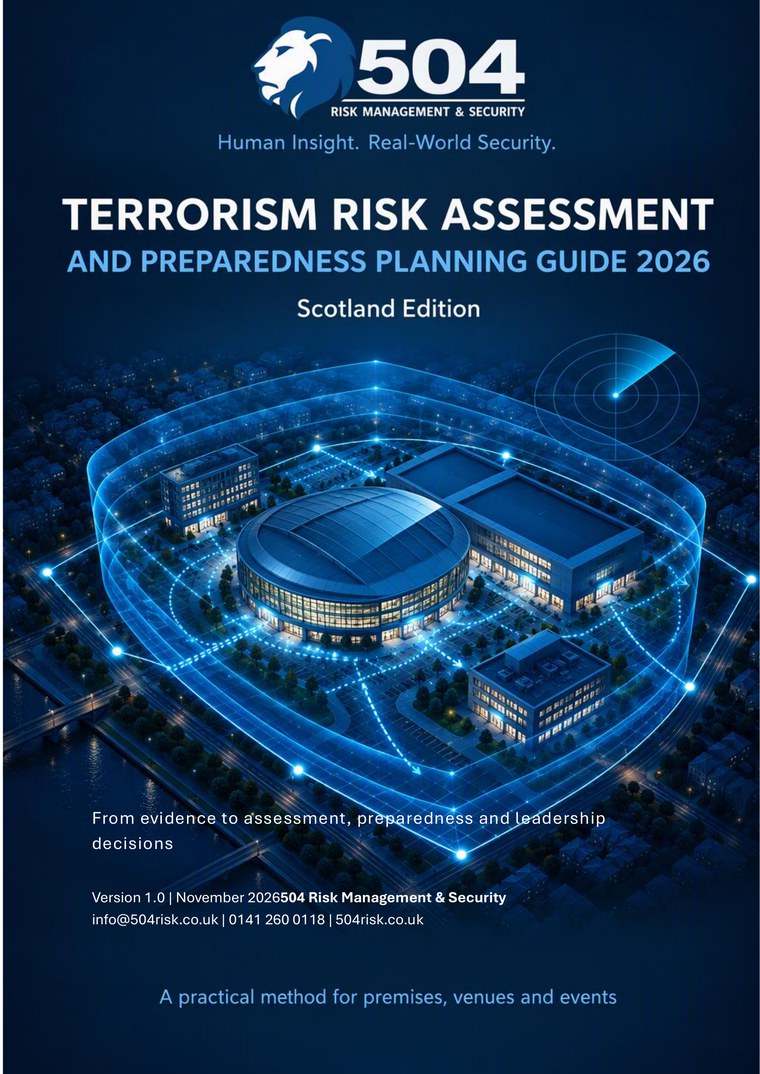
Terrorism Risk Assessment and Preparedness Planning Guide 2026
A step-by-step method for a defensible terrorism risk assessment, the preparedness plan that follows from it, and the paper you put in front of your board. Includes an editable twelve-section template.
See the method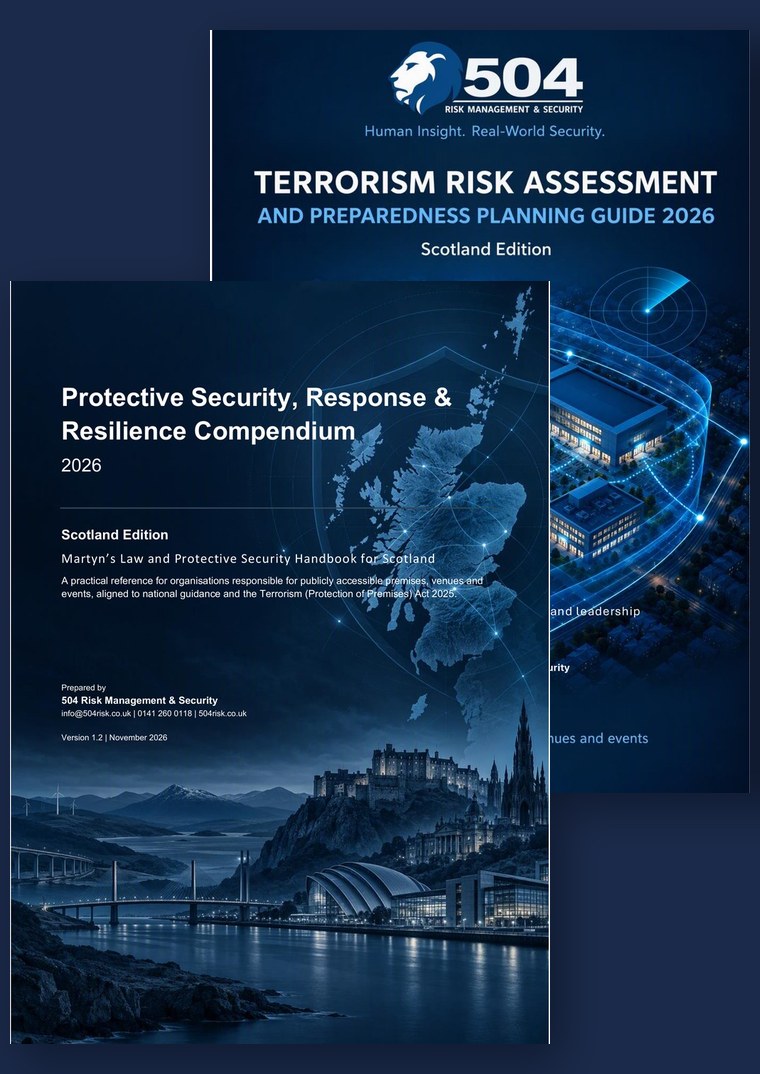
The Martyn's Law Readiness Toolkit
The reference and the method under one licence, for a single site or across a group. Hotel groups, venue operators and BIDs can license it across multiple sites with a briefing call included.
See the toolkitQuestions we are asked most
Does Martyn's Law apply to me?
It applies to premises and events where 200 or more people may reasonably be expected at the same time. Below that number it does not apply. Transport and central government premises are out of scope, as are freely accessible parks, gardens and open spaces unless they hold ticketed events. The scope checker above walks through it.
When does it start?
The Act received Royal Assent on 3 April 2025 and the Home Office published statutory guidance in April 2026. The guidance confirms an implementation period of at least 24 months from Royal Assent, so the duties are expected to start in spring 2027. The exact commencement date has not been confirmed.
What is the difference between standard and enhanced tier?
Standard tier covers 200 to 799 people. You must put public protection procedures in place and notify the regulator, with the emphasis on preparedness. Enhanced tier covers 800 or more. On top of the procedures you need public protection measures, a documented assessment, and a named senior individual accountable for compliance.
Some premises stay in the standard tier whatever their size. Places of worship, where worship is the main use and entry is free, and childcare, primary, secondary and further education premises all remain standard tier even above 800. Higher education does not.
Do I need a terrorism risk assessment?
Enhanced tier premises and qualifying events need a documented assessment. Standard tier premises are not required to produce one, though many find that writing the procedures sensibly is difficult without first understanding the risk. The Risk Assessment Guide sets out a method either way.
Do I need to buy anything to comply?
No. The government has written the guidance so that those in scope can comply without buying consultancy or publications, and neither the Home Office nor the SIA endorses any provider. What our publications offer is the work already done: the law explained for Scotland, the checklists written, and a method you can follow.
Not sure where you stand?
Twelve questions, answered on the page, and you will know which duties you have met and which you have not.
Take the readiness check